
In 2026, the federal solar tax credit is not a small rebate. It is a 30 percent credit against your federal income tax bill. Many homeowners assume the incentive disappeared. That assumption can cost you thousands. The Residential Clean Energy Credit remains one of the largest home energy incentives available. It applies to solar panels, inverters, wiring, installation labor, and qualified battery storage. If you are planning backup power, the credit changes your budget. A $30,000 solar and battery project can produce a $9,000 tax credit. You claim it when you file your tax return. No income cap blocks you. This guide explains what you still qualify for in 2026. If you are comparing battery options, start with our whole-home battery cost guide.
The 2026 tax year may be a smart window for energy independence. The U.S. Energy Information Administration reports that average residential electricity prices have remained elevated, around 16.5 cents per kilowatt-hour. That rate makes self-generated solar more valuable. It also makes battery storage more useful for shifting grid energy. You can pair the tax credit with local utility incentives and net metering. Together, they reduce both upfront cost and long-term bills. The credit applies only to federal income taxes. You still need tax liability to use it. But unused amounts roll forward. We will show you how to stay eligible and avoid common mistakes.
The rules for 2026 are clear for most homeowners but not always obvious. The credit covers equipment you own. It does not cover leased systems. You can claim a battery alone, even if you installed solar years ago. That detail surprises many readers. We will walk through what qualifies, how to calculate your credit, and how the phase-down schedule works. We will also point you to practical tools for sizing storage and comparing backup power. With the right records, you can claim your credit confidently on IRS Form 5695.
| Tax Year | Credit Rate | What Homeowners Should Know |
|---|---|---|
| 2022 to 2032 | 30% | Current full credit rate for solar and battery projects |
| 2033 | 26% | Credit begins to phase down |
| 2034 | 22% | Final year for the credit before expiration |
| 2035 onward | 0% | No credit under current law |
How Does the Federal Solar Tax Credit Work in 2026?

The Residential Clean Energy Credit was extended by the Inflation Reduction Act. In 2026, the credit rate is still 30 percent for qualified residential clean energy property. That means the federal government effectively pays 30 cents of every eligible dollar you spend. The U.S. Department of Energy confirms the credit remains at 30 percent through 2032. After that, it drops to 26 percent in 2033 and 22 percent in 2034. If you install in 2026, you lock in the full 30 percent rate.
A common example helps. Suppose a 10 kilowatt solar array costs $28,000. The federal credit would be $8,400. If your federal income tax liability for 2026 is only $6,000, you use $6,000 of the credit that year. You can carry forward the remaining $2,400. The credit is nonrefundable. It cannot create a refund on its own. It only reduces tax you owe. NREL data shows residential solar costs around $2.70 per watt before incentives. That puts many systems in the $20,000 to $35,000 range. Check current cost ranges in our solar cost guide.
What Home Energy Upgrades Qualify for the 30 Percent Credit?
The list of qualifying equipment is broader than many homeowners realize. Solar panels and solar shingles qualify. Inverters, racking, wiring, and installation labor qualify too. Energy storage devices of 3 kilowatt-hours or more are eligible, including standalone home batteries. Equipment must be new or being used for the first time. It must be installed at a home you own in the United States. According to ENERGY STAR, qualifying solar water heaters must meet specific performance and safety standards. The credit also covers certain contractor fees, permit fees, and sales tax on eligible items.
Some costs do not qualify. A new roof does not qualify even if it supports panels. Structural work, landscaping, and general electrical panel upgrades are often not eligible. However, a panel upgrade needed specifically for solar or battery equipment may count if your tax professional can document the direct connection. Keep clear invoices. For storage options, see the best whole-home batteries guide.
- Solar photovoltaic panels and solar shingles
- Inverters, racking, wiring, disconnects, and monitoring equipment
- Installation labor and contractor fees
- Home battery systems of 3 kilowatt-hours or more
- Solar water heaters that meet ENERGY STAR criteria
Who Is Eligible to Claim the Solar Tax Credit in 2026?
You must own the system. If you sign a lease or a power purchase agreement, the leasing company owns the panels. The leasing company claims the credit and typically prices the lease with that benefit. You can still claim the credit if you buy the system with a loan. The panels are yours. You must also have federal income tax liability. A retiree with little taxable income may not fully use the credit. But the carryforward rule helps. You can roll unused credit forward to future tax years. The IRS sets no income limit on this credit.
The home must be in the United States. It can be your primary residence or a second home. It does not need to be your principal residence. The equipment must be new. Used solar panels generally do not qualify. The system must be placed in service during the tax year you claim. For 2026, that means installation is complete and the system is ready to use by December 31, 2026. If you are planning a grid-down or backup setup, review battery and generator trade-offs in our solar battery vs generator guide.
How Do You Calculate Your Solar Tax Credit in 2026?
The calculation starts with total qualified costs. Add the system price, installation labor, eligible fees, and sales tax. Subtract any qualified utility rebate that is a purchase price adjustment. Do not subtract state tax credits. Multiply the result by 0.30. The answer is your federal credit. For example, a $32,000 solar panel system creates a $9,600 credit. Add a $14,000 battery and you get another $4,200. Total credit is $13,800.
Your credit cannot exceed your federal income tax liability for the year. If you owe $10,000 and your credit is $13,800, you use $10,000. The remaining $3,800 carries forward. The carryforward stays available until the credit expires or you use it. For most homeowners, this means very little credit is lost. The credit is not a tax deduction. A deduction reduces your taxable income. A credit reduces your tax bill dollar for dollar. That is why a 30 percent credit is worth far more than a 30 percent deduction. This can reduce your effective solar cost and improve payback.
What Are the Rules for Battery Storage and Battery Retrofit Projects?
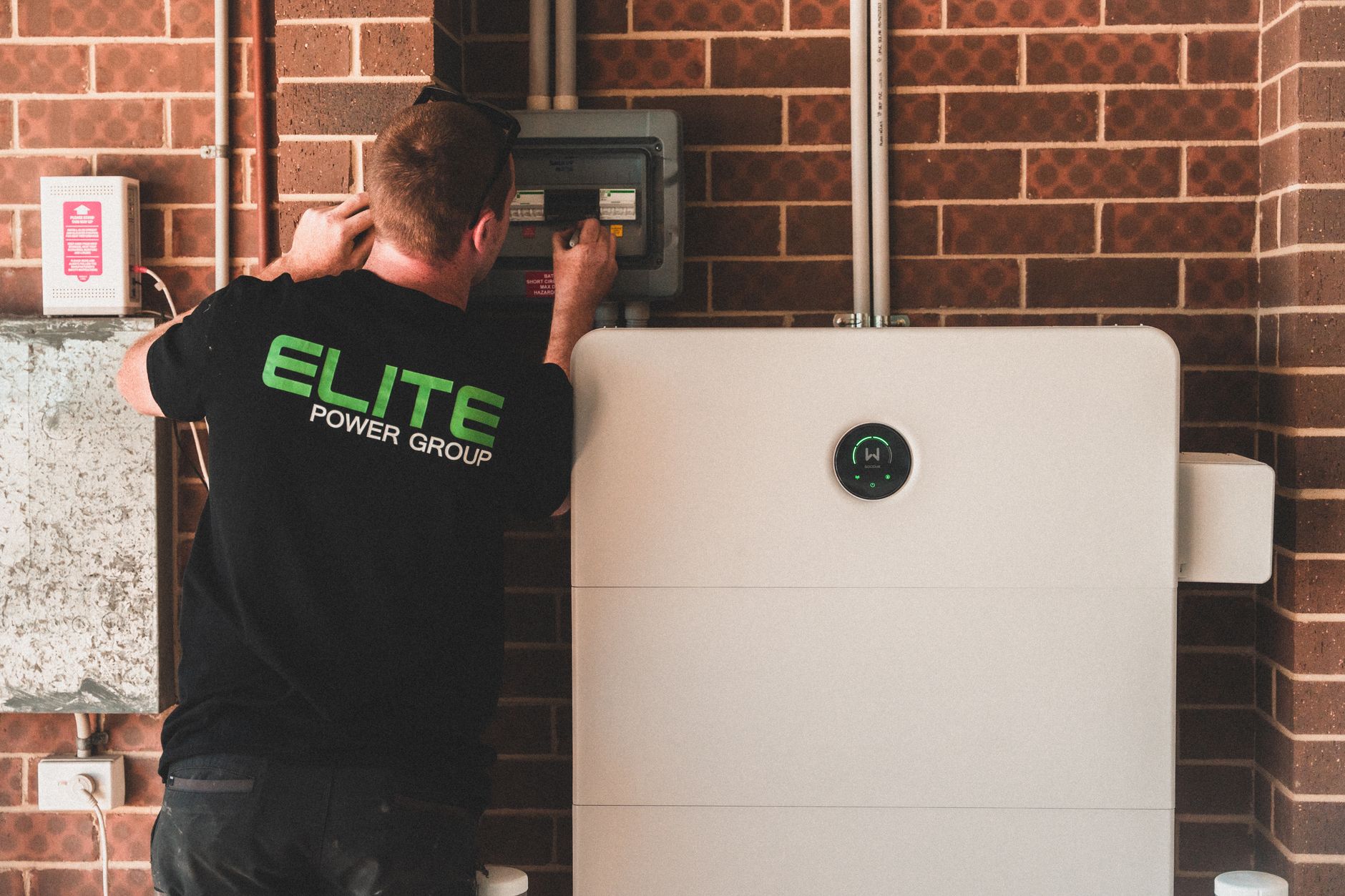
Since January 1, 2023, standalone battery storage of 3 kilowatt-hours or more qualifies for the federal credit. You do not need to install solar panels at the same time. That rule holds in 2026. A home battery can charge from solar, from the grid, or from both. The credit does not require the battery to be charged exclusively by renewable energy. This is useful for time-of-use customers who want to store cheap off-peak electricity. It is also useful for homeowners who want whole-home backup power.
The battery must be installed at your residence in the United States. It can be AC coupled or DC coupled. It must meet applicable electrical and safety codes. If you add storage to an existing solar system, the battery cost and necessary wiring qualify. You do not need to replace your panels. This makes retrofits attractive. A typical 10 kWh battery may cost $8,000 to $15,000 installed before incentives. That means a 30 percent credit could save you $2,400 to $4,500. Our how to size a home battery guide helps you choose the right capacity.
What Common Mistakes Could Reduce or Delay Your Credit?
The most common mistake is claiming the credit in the wrong year. The system must be placed in service before the end of the tax year. If final inspection or utility permission to operate happens in January 2027, you claim on your 2027 return, not 2026. Another error is including nonqualifying costs. Do not include roof replacement, tree removal, or general home repairs. If you sign a lease, do not expect to claim the credit. The owner claims it. If your contractor promises to pass the credit to you, get that arrangement in writing from a tax professional.
Missing documentation can slow your claim. Keep itemized invoices, proof of payment, manufacturer spec sheets, and your signed contract. For battery storage, keep a spec sheet showing capacity of 3 kilowatt-hours or more. File IRS Form 5695 with your federal return. The credit then flows to Schedule 3 of Form 1040. Some states offer additional incentives. Check your state energy office. Do not forget that a home backup generator does not qualify for the solar credit. Generators are useful but separate. For outage planning, see how to prepare for power outages.
Frequently Asked Questions
Is the solar tax credit still 30% in 2026?
Yes. The Residential Clean Energy Credit remains at 30 percent through 2032 under current law.
Can I claim the credit if I install batteries only?
Yes. Standalone battery storage of 3 kilowatt-hours or more qualifies if installed in 2023 or later, including 2026.
What is the difference between a tax credit and a rebate?
A tax credit reduces your federal income tax liability dollar for dollar. A rebate lowers the purchase price before incentives.
Can I carry forward unused solar tax credit?
Yes. You can carry forward unused portions of the credit to future tax years until the credit expires or you use it.
Do rented or leased solar systems qualify?
No. The system owner claims the credit. For leases and power purchase agreements, the leasing company usually claims it.
What forms do I need to claim the solar tax credit?
Use IRS Form 5695 and report the credit on Schedule 3 of Form 1040 for the year the system is placed in service.
What Should You Remember?
- The 30 percent federal credit still applies in 2026 and remains at that rate through 2032.
- Battery storage of 3 kWh or more qualifies even if added to an existing solar system.
- You must own the system to claim the credit. Leases and power purchase agreements generally do not qualify.
- Eligible costs include panels, inverters, wiring, racking, labor, and sales tax but not roof repairs.
- Carry forward unused credit to future years if your 2026 tax liability is lower than the credit.
- File IRS Form 5695 with your federal return after the system is placed in service.
This article is for general information only. Home energy systems involve high-voltage electrical work, building codes, permits, and in some cases utility interconnection approvals , always consult a licensed electrician and your local authority before making purchase or installation decisions. Product specs, pricing, and incentives (including tax credits and net metering) change frequently; verify current details with the manufacturer and your utility.